


Predictive Growth The End of Guesswork: Using Predictive ML to Forecast Ad ROI Before Your First Click
Advertising failure is not caused by poor creatives or low budgets.
It is caused by decision-making in the dark.
Most brands still launch campaigns, wait for data, then optimize after damage is already done. By the time insights arrive, budget has leaked, learning is biased, and opportunity cost is irreversible. In 2026, this approach is operationally negligent.
The era of post-click learning is over.
The future belongs to brands that predict performance before execution.
Why Traditional Ad Forecasting Is Structurally Broken
Marketing teams claim to be data-driven, yet most decisions rely on:
Historical averages
Platform-provided estimates
Gut instinct disguised as experience
These inputs are backward-looking.
Markets, audiences, and intent patterns are not.
Digital advertising systems have become non-linear, volatile, and AI-mediated. Static forecasting models cannot survive environments where:
User intent shifts in real time
Platforms mutate delivery logic
Creatives are interpreted by machines before humans
Guesswork at this scale is not strategy.
It is risk exposure.
Predictive Growth Defined
Predictive Growth is the practice of using machine learning models to simulate campaign outcomes before spend allocation.
At Optzio Neural Lab, Predictive Growth means:
“Replacing reactive optimization with probabilistic foresight.”
This is not forecasting impressions.
This is forecasting ROI behavior under uncertainty.
From Reporting to Anticipation
Most analytics stacks explain what already happened.
Predictive ML answers what is likely to happen next.
This shift requires abandoning dashboards designed for humans and embracing models designed for decision engines.
Predictive ML evaluates variables such as:
Audience response elasticity
Creative-message resonance probability
Platform auction volatility
Funnel decay patterns
Conversion lag curves
Optzio builds systems that anticipate outcomes, not summarize failures.
Why Platforms Cannot Predict ROI for You
Ad platforms optimize for their incentives, not yours.
Platform forecasts are constrained by:
Incomplete cross-channel visibility
Opaque auction mechanics
Short-term engagement signals
They do not understand your margins, lifetime value, or brand constraints. Optzio’s models operate above platforms, not inside them.
This independence is critical.
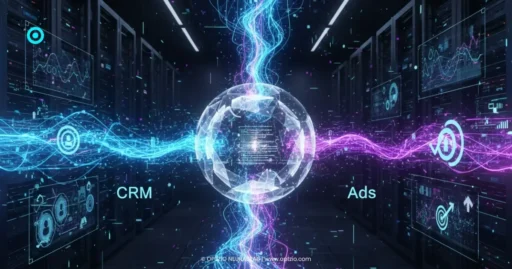
The Optzio Predictive ML Stack
Optzio does not deploy off-the-shelf models.
We engineer custom predictive architectures aligned to business reality.
1. Data Signal Unification
We consolidate:
Historical ad performance
CRM and revenue data
Behavioral analytics
Market demand signals
Noise is filtered. Bias is corrected.
Only decision-grade signals remain.
2. Feature Engineering for Intent
Raw metrics do not predict ROI.
Intent patterns do.
Optzio engineers features that capture:
Pre-conversion hesitation
Channel interaction order
Message fatigue thresholds
Price sensitivity clusters
This is how models learn why users convert, not just when.

3. Probabilistic Outcome Modeling
Instead of single forecasts, Optzio generates outcome distributions.
You see:
Best-case ROI
Median performance expectation
Downside risk exposure
This reframes planning from optimism to risk-aware allocation.
Predictive ML Changes How Budgets Are Allocated
Traditional planning spreads budget evenly, then trims losers.
Predictive Growth concentrates spend before launch based on likelihood of return.
With Optzio, brands can:
Simulate multiple campaign scenarios
Compare creative strategies pre-production
Forecast break-even points accurately
Budget becomes a strategic instrument, not an experiment.
Creative Testing Without Burning Spend
A hidden advantage of predictive ML is creative intelligence.
Optzio models evaluate creative variables such as:
Emotional framing
Semantic intent alignment
Offer clarity
Cognitive load
Before a single impression is served, teams know which narratives are statistically advantaged.
This collapses months of A/B testing into pre-launch certainty.
Why Predictive Growth Is a Competitive Moat
Predictive systems improve with time.
Manual intuition does not.
Brands that adopt predictive ML early accumulate:
Better priors
Faster learning cycles
Lower acquisition volatility
Late adopters will always chase signal.
Leaders manufacture foresight.
Bridging Manual Marketing and Neural Automation
Optzio exists to bridge a critical gap.
Most organizations are trapped between:
Human-led strategy
Machine-led execution
Predictive Growth unifies both.
The Optzio Philosophy
Humans define objectives and constraints
Machines simulate outcomes
Decisions are made before exposure
This is not automation for efficiency.
It is automation for clarity.
Common Misconceptions About Predictive ML
“Our data isn’t big enough.”
Predictive accuracy depends on signal quality, not volume.
“Markets change too fast.”
Models adapt faster than human teams ever could.
“This removes creativity.”
It removes waste, not imagination.
Optzio designs models to amplify strategic intent, not replace it.
The Neural Action Plan
Step 1: Centralize Revenue Truth
Unify ad data with actual business outcomes.
Predictions without revenue context are illusions.
Step 2: Identify Decision-Critical Variables
Stop modeling everything.
Model what materially impacts ROI.
Step 3: Simulate Before You Allocate
Run scenario forecasts across budgets, creatives, and channels.
Spend only where probability favors you.
Step 4: Shift KPIs from CTR to Confidence Intervals
Single numbers lie.
Distributions reveal risk.
Step 5: Continuously Retrain Models
Predictive Growth is a living system.
It must evolve with markets, audiences, and strategy.

From Campaigns to Capital Allocation
At scale, advertising is not marketing.
It is capital deployment.
Predictive ML treats ad spend with the same rigor as financial investments. Every dollar is evaluated for expected return and downside risk.
This mindset shift is irreversible.
Why 2026 Will Punish Guesswork
AI-driven auctions are becoming more efficient.
Inefficiency margins are shrinking.
Brands that rely on experimentation will subsidize those who rely on prediction. Optzio ensures our partners are on the winning side of that equation.
Optzio’s Role in the Predictive Era
Optzio does not sell tools.
We architect decision systems.
Our mission is to help brands:
Replace intuition with intelligence
Replace reaction with foresight
Replace waste with confidence
This is how organizations move from tactical marketing to neural growth engineering.
Final Thought
The question is no longer “Did this campaign work?”
The question is “Why did we ever launch without knowing?”
Predictive Growth is not optional.
It is the operating system of modern advertising.
If you want to know how predictable your growth truly is,
run an AI Audit on Optzio.com.
The future does not reward guesses.
It rewards those who see outcomes before they happen.