
Search Beyond Keywords: How Neural Nodes are Redefining Digital Visibility in 2026
Search is no longer about words. It is about meaning, memory, and machine interpretation.
By 2026, brands that still optimize for keywords alone will not disappear—but they will become invisible.
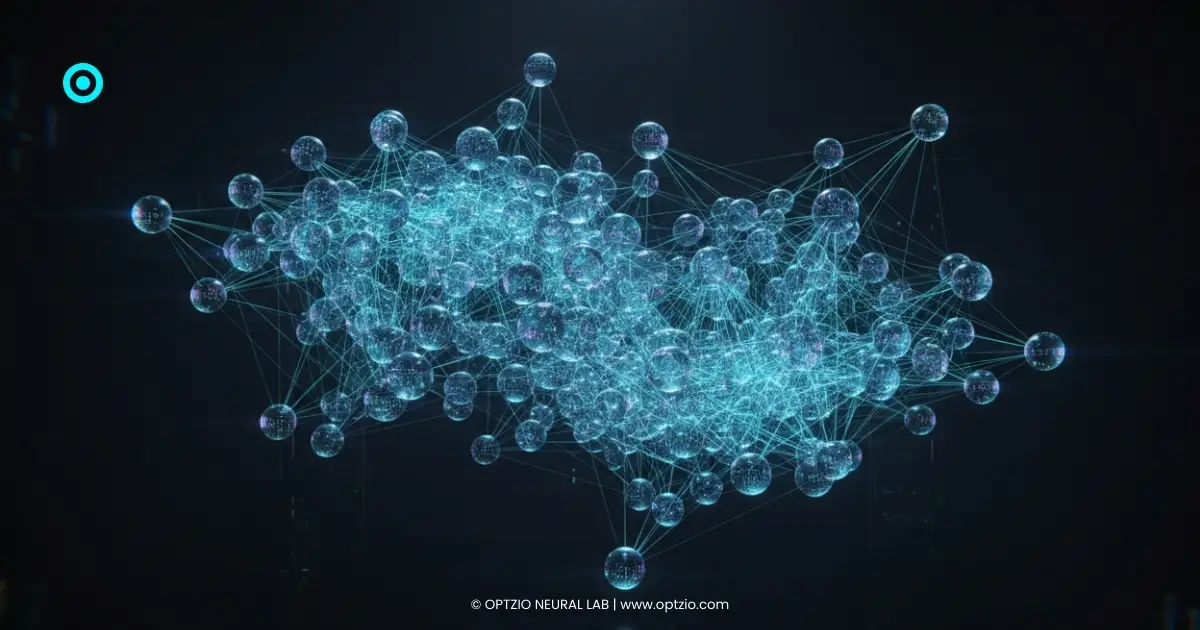
What is replacing keywords is not another SEO trend or algorithm tweak. It is a fundamental shift in how search engines think. Neural systems now map ideas, intent, and relationships as interconnected nodes. Visibility is no longer earned by repetition. It is earned by relevance within a neural ecosystem.
At Optzio Neural Lab, we call this the era of Neural Search Visibility—and it is already reshaping how digital authority is built.
The Collapse of Keyword-Centric Search
For two decades, digital marketing revolved around a predictable formula:
-
Identify keywords
-
Optimize pages
-
Build links
-
Track rankings
That model worked because search engines were literal. They matched strings of text to queries.
Neural search systems are not literal. They are contextual, probabilistic, and adaptive.
In 2026, search engines do not ask, “Does this page contain the keyword?”
They ask, “Does this entity understand the problem behind the query?”
This is the collapse of keyword dependency—and the rise of neural nodes.
What Are Neural Nodes (In Simple Words)?
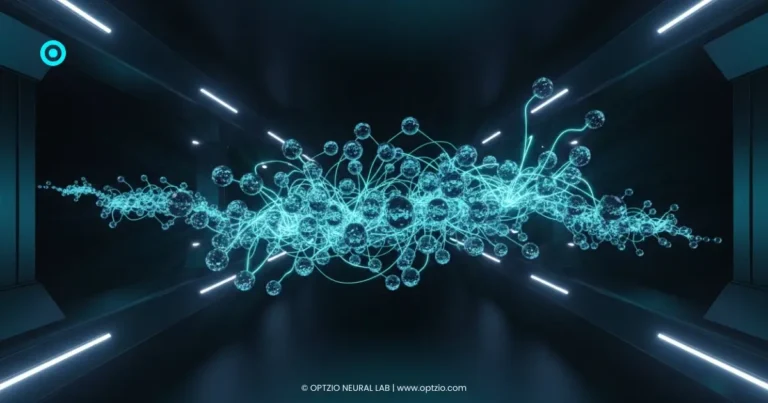
A neural node is a unit of meaning.
Instead of treating content as isolated pages, modern search engines treat the web as a living knowledge graph. Every brand, topic, product, and expert becomes a node connected to other nodes by relevance, trust, and intent.
Neural nodes are built from:
-
Concepts, not phrases
-
Relationships, not backlinks
-
Context, not density
If your brand is not clearly mapped as a trusted node, your visibility decays—even if your SEO checklist looks perfect.
Optzio helps brands transform from keyword publishers into neural entities.
 Why 2026 Search Rewards Understanding Over Optimization
Neural search models now operate across multiple layers simultaneously:
1. Intent Layer
What is the user really trying to solve?
2. Context Layer
What prior searches, behaviors, and signals influence this query?
3. Authority Layer
Which entities have consistently demonstrated expertise in this domain?
4. Synthesis Layer
Which source best integrates multiple perspectives into one answer?
Keywords play a minor role. Semantic depth and structural clarity play the dominant role.
At Optzio Neural Lab, we design content and digital ecosystems that align with all four layers—automatically.
The Visibility Shift: From Pages to Presence
In 2026, brands are no longer ranked. They are referenced.
Search engines increasingly surface:
-
Brand mentions inside AI-generated answers
-
Citations across multiple content formats
-
Entity-based recommendations
-
Conversational summaries
This means your goal is not “ranking position.”
Your goal is neural presence.
Neural presence = how often your brand is selected by AI systems as a trusted reference.
Optzio bridges this shift by converting fragmented digital assets into a unified neural footprint.
 How Neural Nodes Are Built (And Why Most Brands Fail)
Most brands fail in neural search because their digital structure is fragmented.
Common problems we see at Optzio:
-
Blogs disconnected from service pages
-
Social content with no semantic alignment
-
Product pages optimized for conversion, not understanding
-
No clear topical authority clusters
Neural systems interpret this as low confidence.
High-performing neural nodes share three traits:
-
Topical Density – Depth across a subject, not surface-level posts
-
Entity Consistency – Same expertise reinforced across platforms
-
Contextual Connectivity – Clear relationships between ideas
This is not manual SEO work. This is neural architecture.
Optzio’s Role: Bridging Manual Marketing and Neural Automation
Most marketing teams are stuck between two worlds:
-
Manual workflows designed for legacy SEO
-
AI tools used tactically, not strategically
Optzio operates in the middle—turning AI into an autonomous visibility engine.
We help brands:
-
Translate human expertise into machine-readable authority
-
Automate semantic mapping across content ecosystems
-
Align messaging with neural interpretation models
-
Prepare for search environments that no longer show “10 blue links”
Optzio Neural Lab is not an agency. It is a transition layer between human strategy and machine intelligence.

The Neural Action Plan
This is not theory. These are execution-level steps brands must take now to remain visible in 2026.
1. Build Topic-Centric Neural Clusters
Stop creating isolated content.
Create deep topic hubs where:
-
One core concept anchors the cluster
-
Supporting content answers adjacent questions
-
Internal linking reflects conceptual hierarchy
Search engines interpret this as domain mastery, not content volume.
2. Optimize for Entities, Not Pages
Your brand must be recognized as an entity.
This requires:
-
Consistent brand descriptions across platforms
-
Structured data aligned with real-world identity
-
Clear association between brand, services, and expertise
Optzio uses entity-mapping systems to reinforce brand identity at scale.
3. Train AI on Your Knowledge, Not Generic Data
Most brands let AI write for them.
Neural leaders train AI on their proprietary insights.
This includes:
-
Internal frameworks
-
Unique terminology
-
Original models and processes
This creates content that neural systems recognize as non-derivative.
4. Design Content for Answer Engines
Search results are becoming answers, not links.
Content must be:
-
Structured for summarization
-
Clear in definitions and conclusions
-
Modular and extractable
Optzio engineers content that AI systems can confidently quote, summarize, and reference.
5. Measure Neural Visibility, Not Traffic Alone
Traffic is a lagging indicator.
Neural visibility metrics include:
-
Brand mentions in AI outputs
-
Semantic coverage depth
-
Entity association strength
-
Cross-platform consistency
Optzio’s AI Audit identifies where your brand is missing from neural graphs—and why.
Why Keywords Still Matter (But Only as Signals)
This is not the death of keywords. It is their demotion.
Keywords now act as entry signals, not ranking levers.
They help neural systems:
-
Detect topic relevance
-
Understand user phrasing patterns
-
Connect queries to concepts
But they do not determine authority.
Authority is built through structure, depth, and consistency—areas where Optzio specializes.
The Competitive Advantage of Early Neural Adoption
By 2026, neural optimization will not be optional. It will be assumed.
Brands that adapt early gain:
-
Compounding visibility across AI systems
-
Lower dependency on paid acquisition
-
Stronger brand recall in conversational search
-
Long-term resilience against algorithm volatility
Late adopters will face rising costs and declining relevance.
This is not a marketing shift. It is an infrastructure shift.
What Happens If You Do Nothing?
If your brand continues with legacy SEO:
-
Your rankings may hold temporarily
-
Your traffic may fluctuate unpredictably
-
Your brand will appear less in AI-generated results
-
Your authority will be diluted by better-structured competitors
Search engines will not penalize you.
They will simply stop noticing you.
The Optzio Vision for 2026 and Beyond
At Optzio Neural Lab, we believe the future belongs to brands that think like systems.
Our mission is to help organizations:
-
Move from reactive marketing to predictive visibility
-
Replace manual optimization with neural automation
-
Become trusted entities in AI-driven ecosystems
We are not preparing for the future of search.
We are building within it.
Final Thought: Visibility Is Becoming a Cognitive Asset
In 2026, visibility is not about being seen.
It is about being understood—by machines that decide what humans see.
Brands that invest in neural structure today will own attention tomorrow.
Those that do not will compete on shrinking margins and fading relevance.
Run Your AI Audit with Optzio
If you want to know how search engines and AI systems currently perceive your brand, there is only one starting point.
Run an AI Audit on Optzio.com.
Discover your neural gaps.
Activate your future visibility.
The 2026 SEO Neural Checklist: Technical Roadmap for AI Search Dominance